Overview
The real difference: one slab that must not move, hundreds of pieces that can
A concrete driveway is a single poured slab, usually cut with control joints that tell cracks where to form. When the ground under it stays put, it is a clean, simple surface. The problem in much of Jacksonville is that the ground does not stay put: our soil is sandy, it washes and settles unevenly after heavy rain, and roots from oaks and palms keep growing under the slab. A slab cannot bend with that movement, so it answers with cracks, lifted corners at the joints and sections that settle lower than the garage apron. Once a section moves, the repair choices are limited — patch the crack, mudjack or replace the whole section, and a replaced section rarely matches the color and finish of the older concrete around it.
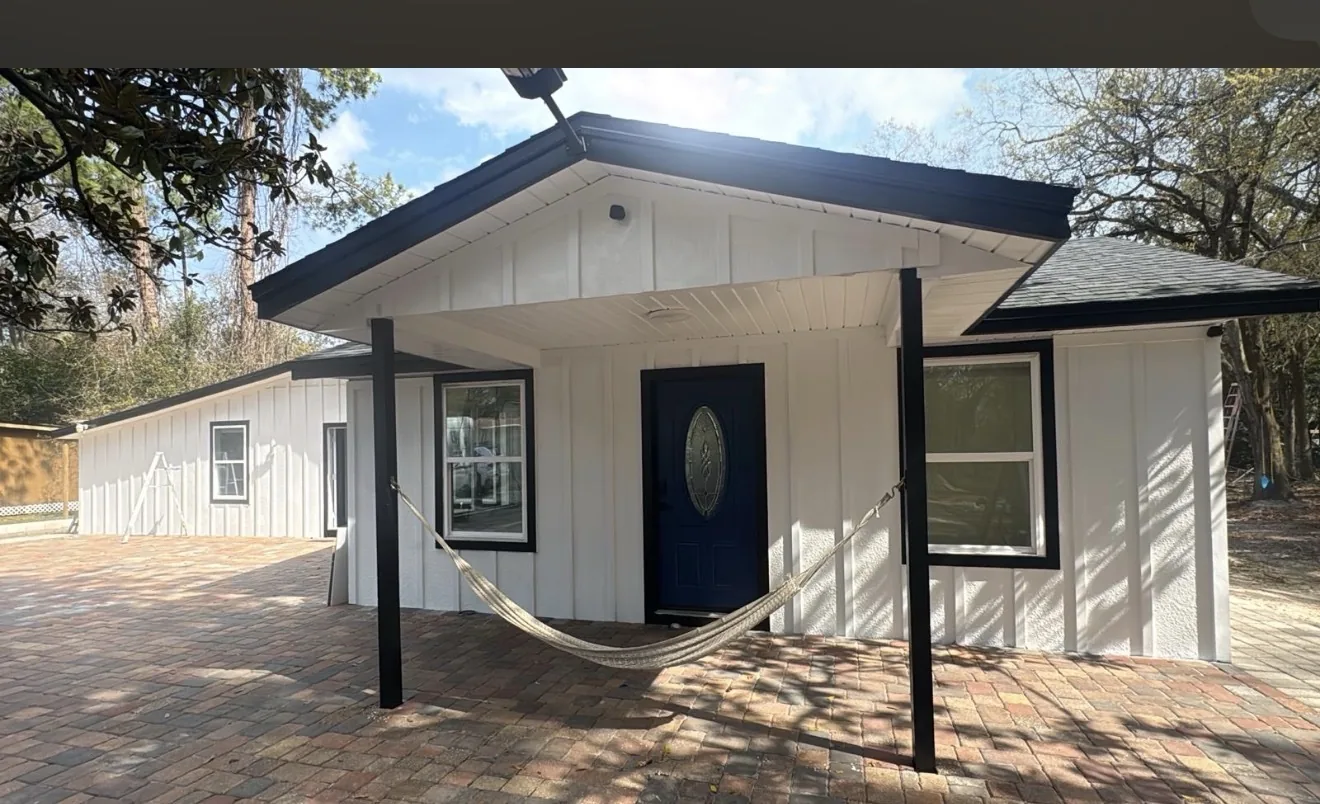
A paver driveway is built the opposite way. Individual concrete pavers sit on a compacted crushed-stone base with a bedding layer, locked together by joint sand and held at the edges by restraints. Because the surface is segmented, small ground movement is absorbed between the pieces instead of cracking through them, and water moves through the joints instead of sitting on top. When a spot does settle — a low area where a delivery truck parks, or a patch lifted by a root — the repair on our paver installation jobs is to lift the pavers in that area, re-level the base, and relay the same pavers. No jackhammer, no new slab, and the repaired area is the same material as the rest of the driveway.
Drainage is the second big difference, and it matters in a city where a summer storm can drop a lot of water in an hour. A concrete driveway sheds all of that water across its surface to wherever the slope sends it — toward the street if the slope is right, toward the garage or the house if settling has changed the slope. A paver surface lets some water pass through the joints into the base while the rest runs off, and because the driveway is built in sections, the slope is set during installation and can be corrected later by relaying an area instead of replacing a slab. On flat lots in Mandarin, Southside and St. Johns, where water already lingers after storms, that difference decides whether the driveway drains or ponds.
Heat and daily use separate them too. Both surfaces get hot in Florida sun, but color drives it more than material: a dark charcoal paver and a dark-stained concrete both bake, while light, natural tones stay noticeably more comfortable underfoot and hide tire marks, sand and pollen better. Pavers also give back some grip when wet because of their joints and texture, where smooth-troweled concrete can get slick with algae in shaded spots — a real issue under the tree canopy in Fleming Island and Orange Park. Neither surface is maintenance-free: concrete wants its cracks and joints watched, and pavers want their joint sand topped up and the surface kept clean. The honest question is which kind of maintenance you would rather do, and which kind of failure you would rather repair.