Luxury Vinyl Plank • Jacksonville, FL

Is Luxury Vinyl Plank Really Waterproof: The Plank, Yes — the Floor System, It Depends

Is luxury vinyl plank really waterproof? The honest answer we give Jacksonville homeowners is this: the plank itself does not swell or soak up water the way a wood-based floor does, but the finished floor is a system of hundreds of planks, seams, edges, and transitions — and water judges the system, not the sample. A spill wiped up in a kitchen is a non-event. Water that is given time at a seam, a cut edge at a wall, or a slow leak under an appliance is a different story. This guide explains what the waterproof claim on luxury vinyl plank actually covers, where water gets in, and what installation and habits keep a Florida floor on the right side of that line.

Free written estimates · Jacksonville, FL

Google reviews
  • Plank vs floor system explained honestly
  • Slab and moisture history checked first
  • Free in-home estimate

Braga Remodeling measures your home, checks the slab or subfloor for moisture history, and matches the plank and the installation plan to the rooms that actually see water.

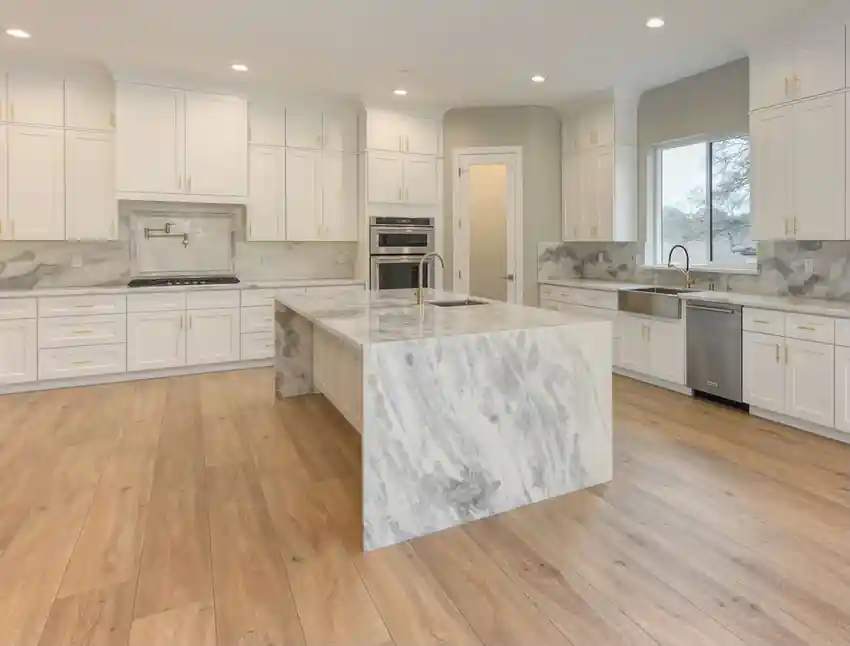
Finished luxury vinyl plank floor in a Jacksonville home by Braga Remodeling
Written EstimateScope and price before work starts
Workmanship WarrantySee what the warranty covers
Free In-Person EstimateWe measure, then put the scope in writing
Google ReviewsRead reviews from Jacksonville homeowners

Overview

Waterproof describes the plank — your floor is a system

Start with what the claim gets right. A rigid-core or flexible vinyl plank is made from materials that do not absorb water through the plank body, and the core does not swell, cup, or soften the way laminate's fiberboard core or a wood floor can when water reaches it. That is a real advantage in Florida, where humidity is constant, wet shoes and pet paws come in from the yard year-round, and kitchens and laundry rooms see water as a routine part of the week. If you set a glass of water down wrong in a Mandarin kitchen and wipe it up, an LVP floor shrugs it off in a way a wood-based floor does not. On the estimate visit, that part of the claim is not where we spend the skepticism.

The skepticism belongs at the joints. Every plank ends somewhere: at the locking seam between planks, at the cut edge along a wall, at the transition in a doorway, and around anything that passes through the floor, such as a toilet flange or a refrigerator water line. Those are the paths water actually takes. A click-lock seam that is fully engaged, flat, and clean is a tight joint; the same seam installed over a high spot in the slab, with debris in the lock or a gap left from a rushed row, is an opening that surface water can sit on and work through. Once water is under the planks, the plank on top can still look perfect while the slab or subfloor underneath stays damp — and in Florida humidity, a damp, covered surface that never dries is where musty odor and subfloor damage begin.

Florida slab homes add a second direction water can come from: underneath. Most Jacksonville, St. Johns, and Orange Park homes we work in sit on a concrete slab, and concrete passes moisture vapor from the ground. A floor can be dry on top and still trap vapor against the underside of the planks if the slab was never checked and the product's own underlayment or moisture requirements were ignored. That is why our jobs start with the surface, not the sample board: we look for the signs of the home's moisture history — old water stains, a soft spot near a bathroom, efflorescence or prior flooring that failed — and we follow the exact product's instructions for what goes between the slab and the plank. The waterproof question is answered as much before installation as during it.

So the useful question is not whether LVP is waterproof in the abstract — it is which water events your rooms actually produce, and whether the floor system is built for them. Kitchens, entries, laundry rooms, and homes with big dogs who drink enthusiastically are strong LVP rooms when the seams start tight and spills get wiped as part of normal life. A bathroom with a history of a leaking toilet, or a laundry room where a washer hose has already failed once, needs the leak history fixed and checked first, because no floating floor of any material is a waterproof pan. Braga Remodeling will tell you plainly when a room's water problem has to be solved before any floor goes down, and when tile is simply the more honest material for that space.
  • The plank does not swell

    Vinyl cores do not soak up water the way wood-based floors do

  • Seams and edges decide

    Water enters at joints, cut edges, and transitions — not through the plank

  • Moisture also comes from below

    Florida slabs pass vapor, so the surface is checked before installation

  • Time is the real test

    Wiped-up spills are fine; water left standing is what finds a way in

Where Water Wins and Loses

What an LVP floor survives — and what it does not

Everyday Spills and Splashes

This is the water LVP handles well. Kitchen splashes at the sink, water tracked in from a Jacksonville afternoon storm, a dog's water bowl sloshed on the way to the door, and bathroom splashes that land and get wiped during normal cleaning — the plank surface sheds all of it, and tight seams keep a promptly cleaned spill on top of the floor where it belongs. The habit that makes this true is unglamorous: wipe water when you see it instead of leaving a puddle to sit while the day moves on.

  • Sink, entry, and pet-bowl water is a wipe-up event
  • Tight, fully engaged seams keep spills on the surface
  • Prompt cleanup is part of the waterproof performance

Seams, Cut Edges, and Transitions

Water that gets time looks for the system openings: a locking seam that never fully clicked because the slab underneath had a high spot, the cut edge of the last row hidden under baseboard, and the transition strip where the LVP meets tile, carpet, or a tub. Those edges are exactly why installation quality is a waterproofing issue, not just a looks issue. Flat preparation, clean locks, correct expansion space, and properly finished perimeter edges are what close the paths water would otherwise use.

  • Unseated seams over slab high spots are the main entry path
  • Cut edges and door transitions need a correct finish
  • Preparation and clean installation are the waterproofing

Slow Leaks Under Appliances

The water event that actually damages LVP floors in our jobs is rarely a dramatic flood — it is the slow, hidden leak: a refrigerator ice-maker line weeping behind the unit, a dishwasher connection dripping once per cycle, a washing-machine hose aging in a St. Johns laundry room. The water spreads quietly under the planks, the surface looks fine for a long stretch, and the first visible sign is often a seam lifting, a soft or hollow feel, or a musty smell at one appliance. Checking those connections when anything changes at the floor is worth more than any waterproof rating printed on a box.

  • Slow leaks spread under planks while the surface looks fine
  • A lifting seam or musty smell at an appliance is an early warning
  • Fix the leak first — no floor covering repairs plumbing

Standing Water and Flooding

No floating plank floor should be sold to you as flood-proof, and we will not sell it that way. Water that stands across a room — a burst supply line, a water heater failure, storm water that comes in at a door — will find the seams and the perimeter, and what matters afterward is what happened underneath: the slab, the subfloor at the walls, and the baseboard and drywall that wicked water up. After a real flooding event, the honest process is to open the floor up, dry and inspect what is underneath, and replace what was damaged, rather than trusting that a waterproof plank made the water disappear.

  • Standing flood water gets past seams and perimeter edges
  • What is underneath must be dried and inspected after flooding
  • Waterproof plank does not mean a flood needs no repair

Wet Mopping and Steam Cleaning

How a floor is cleaned can quietly work against it. A soaking wet mop pushes a small amount of water into every seam on every pass, week after week, and that repeated, directed water is harder on a floor system than the occasional spill it was built for. Damp-mopping — a mop wrung out so the floor dries quickly behind it — cleans the surface without feeding the joints. Steam cleaners deserve the same caution: heat and forced moisture at the seams are the opposite of what a locking system wants, and many plank makers exclude them in the product care instructions, which is the document that governs your floor.

  • Damp-mop so the floor dries quickly — do not soak the seams
  • Repeated flooding at joints wears the system down
  • Follow the exact product's care instructions, including on steam

Bathrooms and Laundry Rooms

These are the rooms homeowners ask about most, and they deserve a room-by-room answer rather than a yes or no. A powder room or a guest bath with a sound toilet seal and no leak history is a far easier assignment than a full bath where a tub overflows, kids splash daily, and a toilet has rocked on a failing seal. In a full bathroom, tile remains the material built to live inside a waterproofed wet system, and we say so when we see one. Where LVP is used in a wet-adjacent room, the toilet flange, the tub edge, and the room's leak history get checked and addressed first — the floor is the finish, not the fix.

  • Judge the room's real water use, not the room's name
  • Toilet seal and leak history are checked before any floor
  • Tile is the honest pick for a true daily wet zone
Get a Free LVP Estimate

Our Process

How Braga Remodeling builds an LVP floor that keeps water out

01

Measure and Review the Water History

We measure the home and ask where water has already been: appliance leaks, a toilet that has been reset, a room that flooded, a slab stain under the old floor. The free in-home estimate starts with that history, because it decides what has to be checked or fixed before a plank is ordered.

02

Check the Slab or Subfloor

The surface under the new floor is checked for flatness, damage, and moisture signs. High spots that would hold seams open are ground or patched, soft or damaged sections are addressed, and the exact product's underlayment and moisture requirements are confirmed for your slab.

03

Install With Seams Fully Seated

Planks go down clean, row by row, with locking joints fully engaged over the prepared surface and the expansion space the product calls for left at the walls — the details that decide whether surface water stays on top of the floor.

04

Finish Edges and Transitions

Baseboards or shoe molding, doorway transitions, and the edges at tubs, cabinets, and fixtures are finished so the perimeter of the system is closed correctly and reads as one completed installation.

05

Walk It and Talk Water Habits

We walk the finished floor with you and cover the few habits that protect it: wipe standing water when you see it, damp-mop instead of soaking, and check under appliances at the first sign of a lifting seam or a musty smell.

Service Areas

LVP installation across Jacksonville and Northeast Florida

The same seam, slab, and moisture checks are followed in Mandarin, Nocatee, St. Johns, and Ponte Vedra.

  • Jacksonville
  • Ponte Vedra
  • Nocatee
  • St. Johns
  • St. Augustine
  • Jacksonville Beach
  • Orange Park
  • Fleming Island
  • Mandarin
  • San Jose
  • Riverside
  • Julington Creek
  • Atlantic Beach

Check your service area

Enter your ZIP to see whether it is on our standard Jacksonville-area service list.

Explore remodeling service areas

FAQ

Waterproof LVP Questions

The plank is; the finished floor depends on the system. A vinyl plank does not absorb water or swell the way wood-based flooring does, so everyday spills, splashes, and tracked-in rain are handled well. But a floor is hundreds of planks joined at seams, cut at the walls, and finished at transitions, and water given time — a slow leak, a puddle left standing, flood water across a room — can work through those openings to the slab or subfloor underneath. That is why the honest answer pairs the product with the installation: tight seams over a flat, checked slab are what make the waterproof claim true in a real Jacksonville home. Call (904) 520-1994 for a free in-home estimate.

The words describe how the core reacts to water. A waterproof-core plank — typically a rigid stone-plastic or wood-plastic composite core — does not swell or break down when it gets wet. A water-resistant product tolerates surface moisture for normal use but its core can be damaged by water that reaches it and stays. The label on the box is only the starting point, though: either type is still installed as a system of seams and edges, so a water-resistant and a waterproof plank can both be undermined by the same slow leak under a dishwasher. Check the exact product's specification, and judge the floor by its seams and installation as well as its core.

Yes — through the openings every plank floor has: a seam that is not fully seated, the cut edge at the perimeter, a transition at a doorway, or around a toilet or appliance line. Water needs time more than volume; a spill wiped up promptly stays on top, while a small leak that runs for weeks under a refrigerator spreads underneath without showing on the surface. The warning signs we tell homeowners to act on are a seam starting to lift, a spot that feels soft or hollow, and a musty smell near an appliance or a bathroom wall.

It depends on the bathroom. A powder room or a guest bath with no leak history and a sound toilet seal is a reasonable LVP room when the edges at the tub and toilet are finished correctly. A full family bathroom — daily showers, tub splashing, a toilet that has leaked before — is a true wet zone, and tile set inside a waterproofed system is the material built for that job; we recommend it honestly when we see one. Either way, a rocking toilet or a failed seal gets fixed first, because no floor covering is a repair for a leak underneath it.

Standing water across a room gets past the seams and the perimeter of any floating plank floor, so the work after a flood is not about the plank's rating — it is about what the water reached underneath. The floor needs to come up in the affected area so the slab or subfloor, baseboards, and the bottom of the drywall can be dried and inspected, and damaged material replaced. Planks that stayed sound can sometimes go back down once everything underneath is verified dry, but skipping the inspection because the surface looked waterproof is how hidden moisture turns into a bigger repair later.

Damp-mop, yes; soak or steam, no. A mop wrung out well cleans the surface and dries quickly, which is what the floor wants. A soaking mop pushes water into the seams on every pass, and a steam cleaner forces heat and moisture directly at the locking joints — many plank makers specifically exclude steam in their care instructions. The exact product installed in your home is the authority here, which is why we recommend keeping its care sheet with your project paperwork.

No — and on a Florida slab the moisture question runs the other way as well. An LVP floor covers the slab or subfloor; it does not waterproof it, and concrete passes ground moisture vapor upward, which is why the surface is checked and the product's underlayment and moisture requirements are followed before installation. A floor installed over a slab with an unaddressed moisture problem can trap that vapor underneath. Checking first is a short step on the estimate and installation side, and it is the step that keeps a waterproof plank from being blamed for a slab problem that was there before it arrived.

Google Reviews

What customers say

Loading the latest Google reviews…

See all reviews on Google

“I had a great experience with this construction company. They were honest, reliable, and did exactly what they promised. The team was professional, hardworking, and paid attention to every detail.”

Acsa S.

“We had an overall wonderful experience with Braga Remodeling. They were responsible, professional and communicated well throughout the process.”

Luna W.

“Excellent service and outstanding workmanship! The crew was punctual, respectful, and very knowledgeable throughout the entire project.”

Marcela S.

Reviews from Google

Get an honest waterproof answer for your rooms

Tell us which rooms see the water — kitchen, entry, laundry, bath. We will measure the home, check the floor underneath and its moisture history, and put the Braga Remodeling scope in writing. Prefer to talk? Call (904) 520-1994 or email braga@bragaremodeling.com.

Call (904) 520-1994

Get Your Free Estimate

Tell us about your project and we'll respond within a few business hours.

Check your service area

Enter your ZIP to see whether it is on our standard Jacksonville-area service list.