Overview
What makes a kitchen backsplash survive daily cooking
Kitchen backsplash tile in a Jacksonville home deals with more abuse than any other tile surface: a range throws heat and grease at the wall behind it, steam rises off boiling pots, and the area gets wiped down far more often than a bathroom wall. The tiles that hold up are dense, non-porous, and set on a flat wall — glazed ceramic, porcelain and glass all qualify. Porous stone and unsealed handmade looks can work, but they ask for sealing and more maintenance in return.
The grout is usually the weak point, not the tile. A mosaic sheet of small tiles has many times more grout line than a large-format field tile, and every inch of grout is a place where grease and cooking residue can lodge. Behind a range, cement grout can stain within months; epoxy grout resists staining and stands up to scrubbing. In Florida kitchens, where humidity keeps grout damp longer, choosing the grout is as important as choosing the tile.
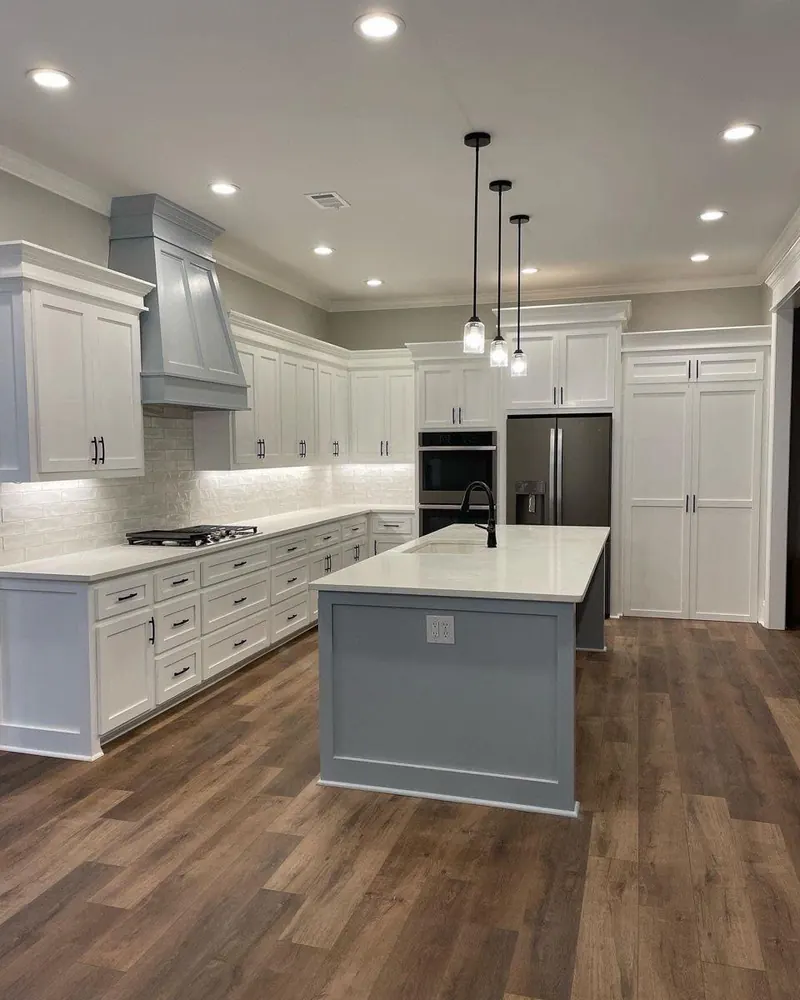
Scale matters too. The standard gap between countertop and upper cabinets is about 18 inches, which makes proportions important: a single row of large tiles can look calm and modern, while small mosaics add pattern and texture. In our kitchen jobs around Jacksonville — from Mandarin ranches to Nocatee open plans — the backsplash is often visible from the living room, so it doubles as a design feature. That visibility is exactly why a full kitchen remodeling plan treats the backsplash as part of the whole room, not an afterthought.
One pattern we see often: the first thing to fail in a kitchen refresh is whatever went up fastest — peel-and-stick sheets behind the range, or thin paint over drywall. Heat softens adhesives and steam works into edges. If you want a backsplash you never think about again, real tile set in thin-set on a prepared wall is the standard that holds, and it is the standard we install in our tile installation work.